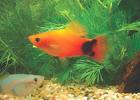
 This is a mickey mouse platy. | 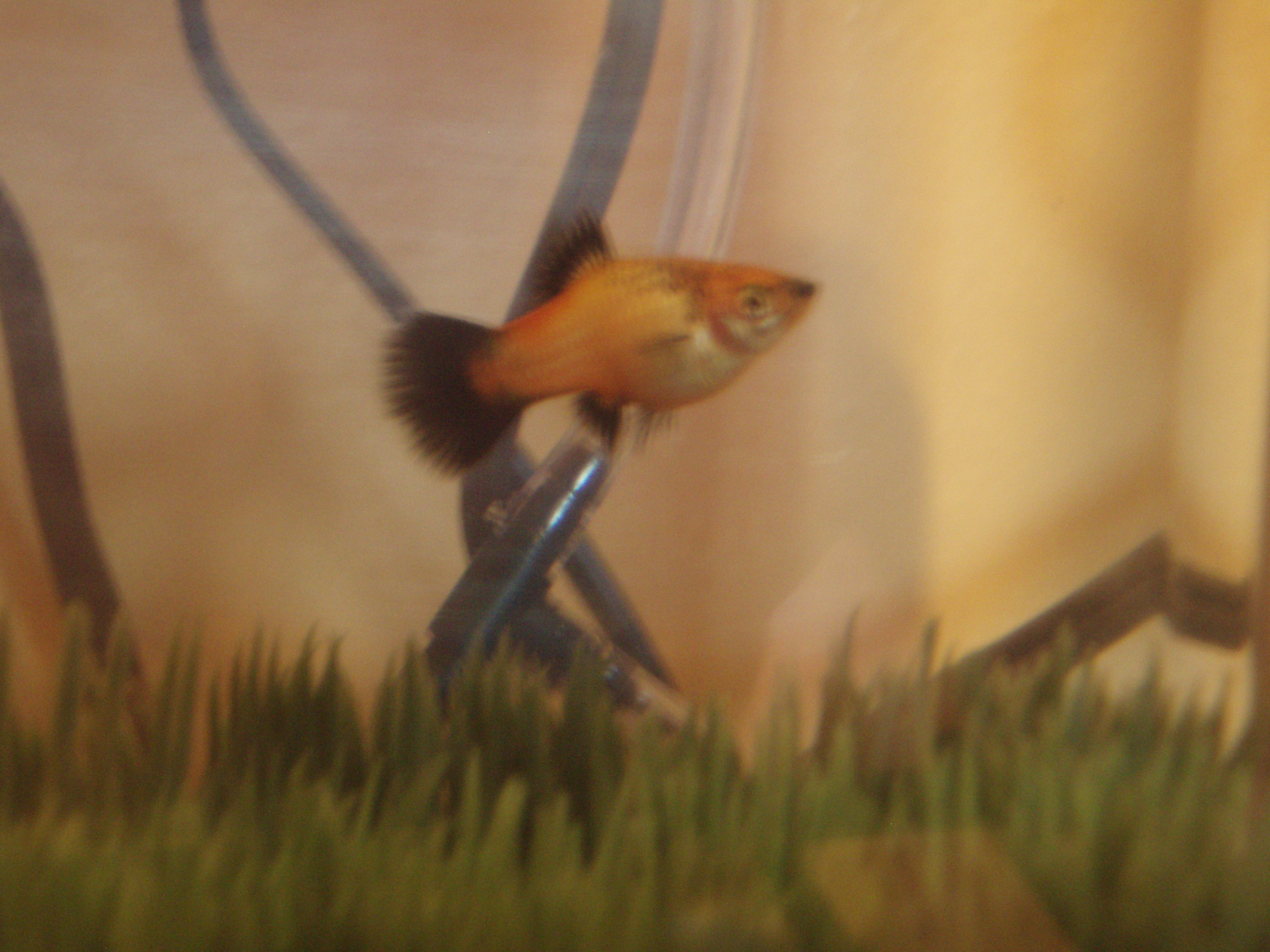 This is a sunset platy. |
About platies
Platies, like most other livebearers, are members of the peociliidea family and are found in mexico,belize, and guatemala. These fish are a very nice addition to a community tank because they are very peaceful.They add interest and color to your tank or community tank.They are very easy to breed and like mollies they are livebearers .
How to feed platies
You can feed them live or frozen brine shrimp or tropical fish flake food.
How to breed platies
If you put them in a community tank they will eventually mate and the female will get fat and if you want to keep some fry you can put her in a separate tank, or a net breedrer will do just fine.keep a close eye on her if she is very fat and if she looks like she is ready to spawn look towards the back and she will look almost square-like and swollen in the middle.then when the fry are born you need to remove the mom.
How to feed platy fry
You should feed the fry frozen baby brine shrimp or very finely crushed tropical fish flake food.
Average Size
They can get up to 2-2 1/2 inches,really depending on species of platy.
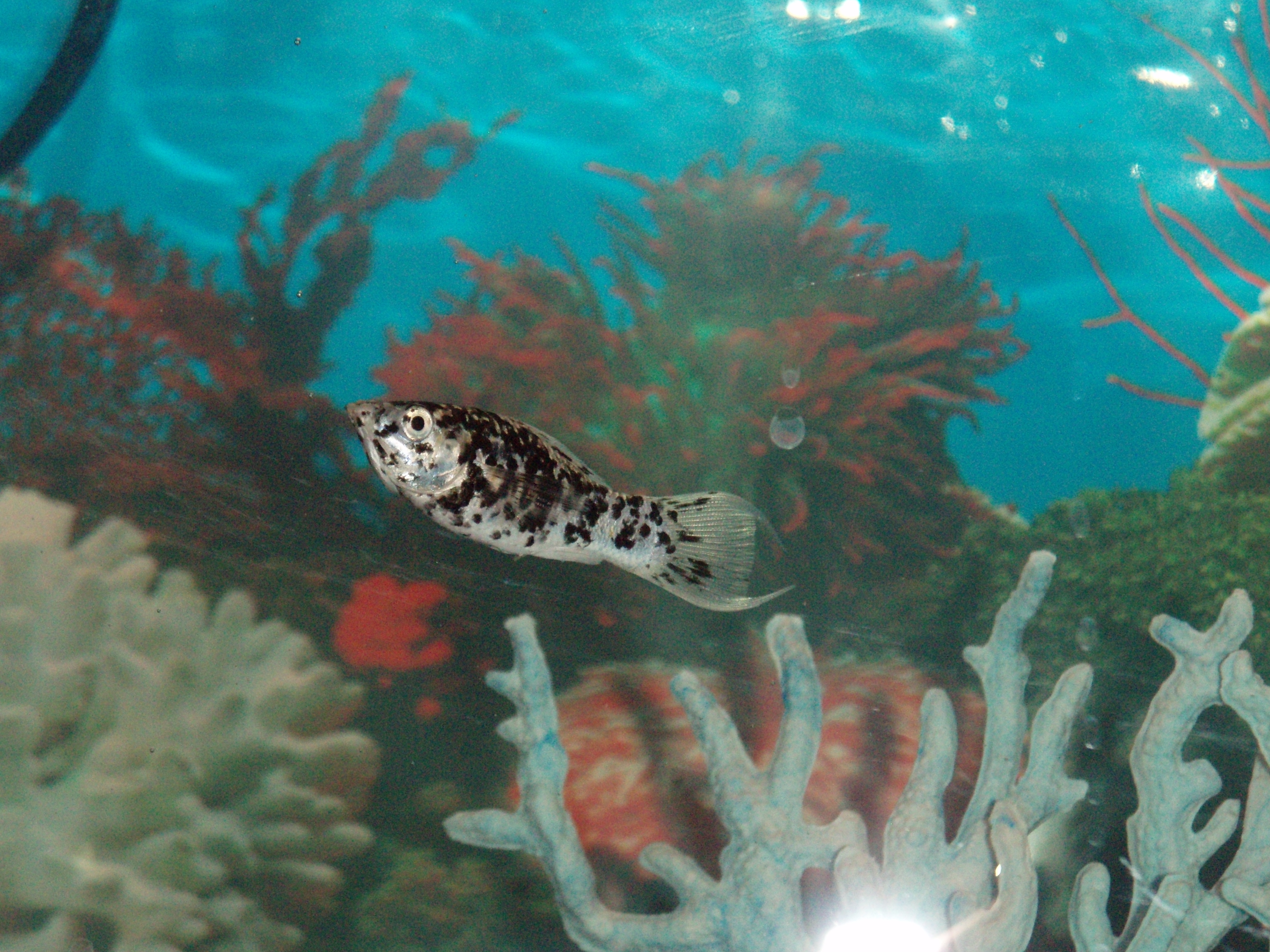 |  |
All About Mollies
Mollies are members of the Poeciliidae family and are widely distributed from the southern United States to South America. Mollies are very versatile fish having the unique ability to live in both freshwater and saltwater if acclimated slowly. Some saltwater aquarists use mollies to establish a new marine aquarium. Mollies are tolerant of a variety of water conditions, but prefer some aquarium salt in the water for optimum health. Ideally at least a tablespoon of aquarium salt per gallon minimum is recommended. Through selective breeding programs, Sailfin, Balloon, and Lyertail varieties are available. Most mollies grow slightly larger than other livebearers, so it is best to provide these fish with an aquarium of at least 30 gallons, with plenty of hiding spaces. Just like other livebearers, mollies are easy to breed, and make fascinating fish for the seasoned aquarist. These fish will add drama and contrast to the semi-aggressive aquarium.
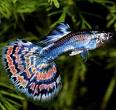 This is a male fancy guppy. | 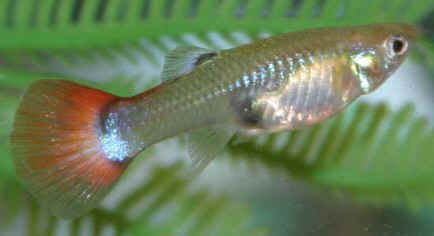 This is a pregnant female guppy. Notice the gravid spot. |
All About Guppies
With an average life expectancy between 5 and 7 years, livebearers are relatively long-lived. This allows most people to witness the birth of several generations of fry. In fact, one of the most fascinating aspects of keeping livebearers is the rearing of young fry. People of all ages will be immediately enthralled and discover a new joy to fish keeping. Livebearers provide depth and dimension to fish keeping, provide a fantastic learning experience for both children and adults, and nurture a life-long appreciation for the aquarium hobby.
The Birth of Guppy Fry
For most people, their first experience with fry is often through livebearers. Without any effort on your part, you may discover that the livebearers you brought home have given birth to a small brood. Depending on water conditions, temperature, and diet some livebearers can have broods as often as every four to eight weeks. You can tell if a female is ready to give birth by her enlarged abdomen or a dark spot located near her anal fin. The spot will turn darker as her delivery date nears. But you must be watchful because some fish will eagerly feast on the newly hatched fry.
To prevent this from happening, place the pregnant female in a separate 5-20 gallon breeding tank just before she releases the fry. This nursery should have all the features of a regular aquarium including filtration (simple foam filters are a great choice), a heater, and some artificial plants for cover. Float the plants, as babies will hide at the surface when first born. Substrate is not necessary and having no substrate makes it easier to see and remove uneaten food. After the pregnant female has released all of her fry, remove the female and return her to the main display aquarium.
Raising the Fry
The fry should be fed a quality food, such as baby brine shrimp, baby fish food, or quality flake food ground into a fine powder. Feed the fry small amounts several times a day. Maintain good water quality by performing regular water changes. Using water from your established aquarium is a great way to acclimate the fry to water conditions of their future home. In about 4 to 6 weeks, the babies should be large enough to release into the main aquarium. But be sure the babies have grown larger than the mouths of adult fish. If it's not possible to set up a separate aquarium, drop-in breeders are a great alternative. Keep in mind that the babies will quickly outgrow and crowd the net breeder. The fry will need to be moved to a larger aquarium sooner to ensure proper growth.
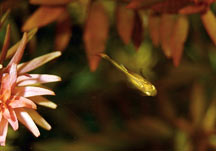
This is a guppy fry.
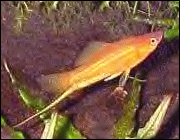 This is a male swordtail. | 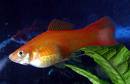 This is a pregnant female swordtail. Notice the gravid spot. |
All About Swordtails
A beautiful male sporting a "sword" tail is one of the most striking physical characteristic possible by any aquarium fish. Even though there is no apparent purpose for this tail, it is 1/4 to 1/3 the total length of the fish. The wild species have an even more majestic tail, with swords up to 6 inches (15 cm). Though the "sword" tail is shorter in tank bred specimens it is complimented by the wonderful colors that are now available.Extremely popular because they are one of the prettiest fish, the Swordtails are also easy to breed, fast growing and readily available.They are generally peaceful lively fish that swim in loosely grouped schools. Even though they are considered a good community fish, there are potentially many different behavior patterns and temperments. The individual fish vary from peaceful harmonious tankmates to bullies. Older males especially can tend to be aggressive toward each other and other species.Swordtails do best in a well planted tank with lots of room to swim around. Provide floating plants to protect the young as the parents often eat their fry. Like all livebearers, they do like a bit of salt though it is not necessary.
For all these fish you can do the same.You can feed them the same thing, breed them the same way,deal with the fy the same way.These are great first beginner fish and will go along with any fish.
